
EN
USD
When you sleeve a deck, you are choosing more than a color or a piece of artwork. You are also deciding how much protection, thickness, and preparation you want in your everyday setup.
Single sleeving keeps things simple: one playing sleeve around each card. Double sleeving adds a close-fitting inner sleeve beneath the regular playing sleeve.
Choose single sleeving if you prioritize a slimmer deck and straightforward setup. Consider double sleeving if you want an additional protective layer and are comfortable with the extra cost, preparation, and storage space.
Here is what changes between the two—and what to check before sleeving your entire deck.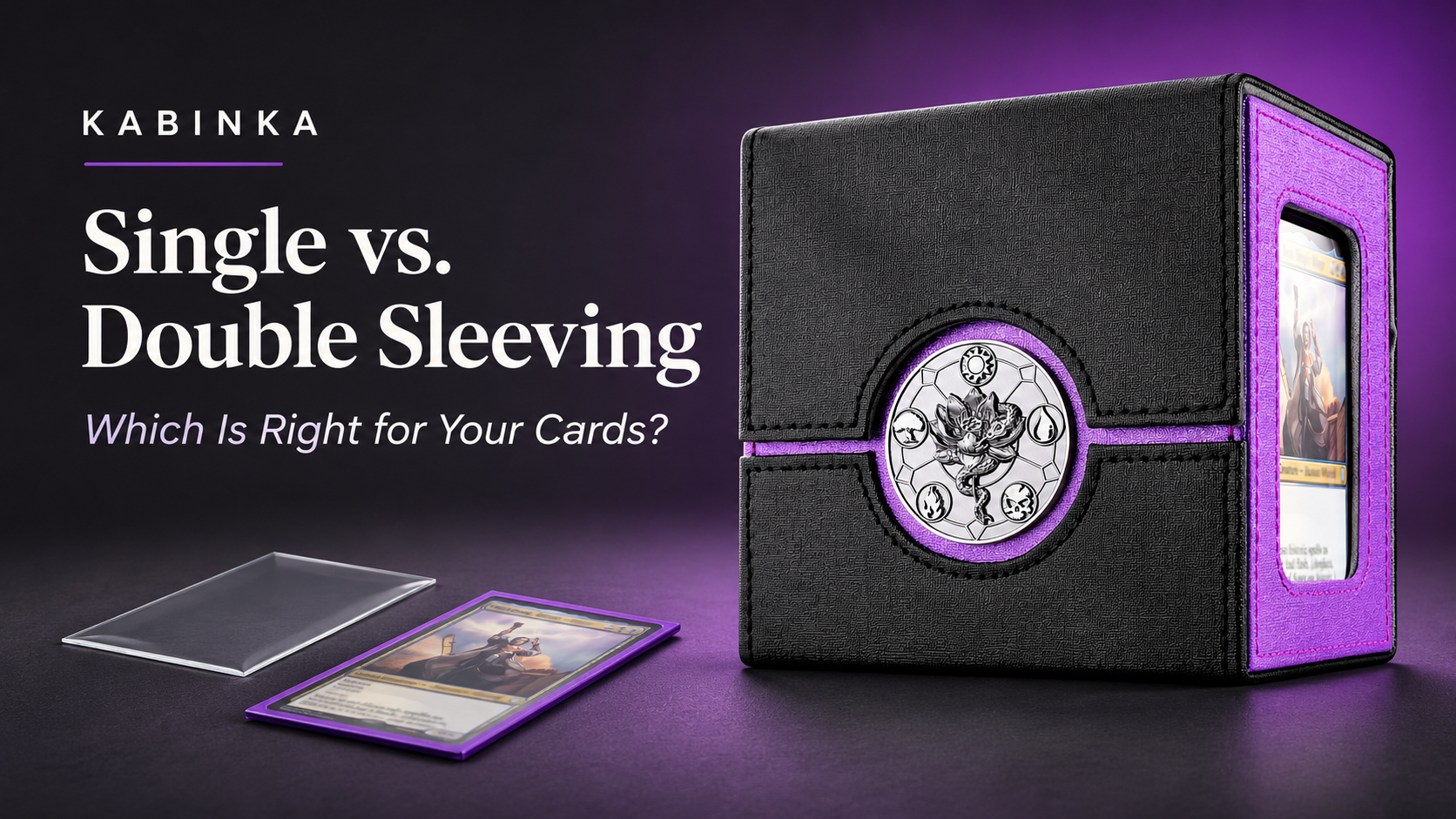
Single sleeving means placing each card inside one sleeve. For a deck you regularly shuffle and play, this usually means a playing sleeve designed for that card size.
The sleeve provides a barrier between the card and your hands, the table, and neighboring cards during normal use. It also takes much of the surface wear that would otherwise affect the card directly.
Single sleeving is quick to set up and makes replacing worn sleeves relatively straightforward. It also keeps the deck thinner than the same cards in a comparable double-sleeved setup.
The opening remains a potential entry point for dust or moisture, however. Sleeves still need careful handling and suitable storage.
In this guide, double sleeving means using two layers:
A close-fitting inner sleeve around the card.
A regular playing sleeve around the inner-sleeved card.
Terminology can vary between brands. Some products labeled “outer sleeves” are larger oversleeves intended to go over an existing playing sleeve. Check the product’s intended use rather than relying on the word “outer” alone.
A properly fitted inner sleeve adds a protective layer and can remain on the card when you replace the regular playing sleeve. That can be useful for cards you want to handle less directly.
Double sleeving does not make cards waterproof, rigid, or immune to damage. You still need to keep them away from spills, excessive pressure, and unsuitable storage conditions.
| Consideration | Single sleeving | Double sleeving |
|---|---|---|
| Sleeve layers | One playing sleeve | An inner sleeve plus a playing sleeve |
| Setup | Fewer steps | More time needed to sleeve each card |
| Cost | One set of sleeves | Two compatible sets of sleeves |
| Deck thickness | Generally slimmer | Generally thicker |
| Handling | Less bulk to hold | Extra bulk may change shuffle feel |
| Protection | A barrier against everyday handling wear | An additional protective layer |
| Storage | Usually requires less space | Requires checking double-sleeved capacity |
The difference in feel depends on the specific sleeves. Thickness, texture, fit, and condition all matter, so it is worth trying a small sample before committing to a full deck.
Single sleeving can be a practical choice when you want a simple setup that is easy to maintain.
You may prefer it if you:
Like handling a slimmer deck.
Frequently rebuild decks or swap large numbers of cards.
Want to keep sleeve costs lower.
Are starting with your first deck and want fewer preparation steps.
Choosing one layer does not mean ignoring card care. Use sleeves that fit properly, replace damaged ones, and store the deck in a suitable box.
Check sleeve corners and seams periodically. A worn or split sleeve should be replaced regardless of how many layers you use.
Double sleeving may suit cards you especially want to preserve, whether their importance is financial, sentimental, or simply personal.
It can also be useful if you change regular playing sleeves but prefer to leave a protective layer on the cards during the process.
The tradeoff is additional bulk. A large deck may feel noticeably different in your hands, and a box that comfortably held the single-sleeved version may become tight.
Before switching, consider the whole setup: the inner sleeves, the regular sleeves, your handling preferences, and the space available in your deck box.
Begin with a clean, dry workspace and sleeves intended to fit your card size.
For a conventional top-loading inner sleeve and a regular top-loading playing sleeve, arrange the openings at opposite ends. With the card upright, the inner sleeve opening should be at the bottom, while the regular sleeve opening is at the top.
Then work through these steps:
Test one card first. Use a spare card to check that the sleeve combination fits without force.
Fit the inner sleeve. Insert the card gently and make sure it sits fully inside without bending.
Insert it into the regular sleeve. Guide it slowly, checking that the inner sleeve does not bunch up or slip off the card.
Inspect the result. Look for folded corners, distortion, or an unusually tight fit.
Repeat consistently. Use the same sleeve combination throughout the playable deck.
Sealable and side-loading inner sleeves work differently, so follow the instructions for the specific product. Sleeve manufacturers offer several inner-sleeve styles; Dragon Shield’s double-sleeving overview provides examples.
If insertion requires force, stop and reassess the combination. A sleeve should not need to bend the card to accommodate it.
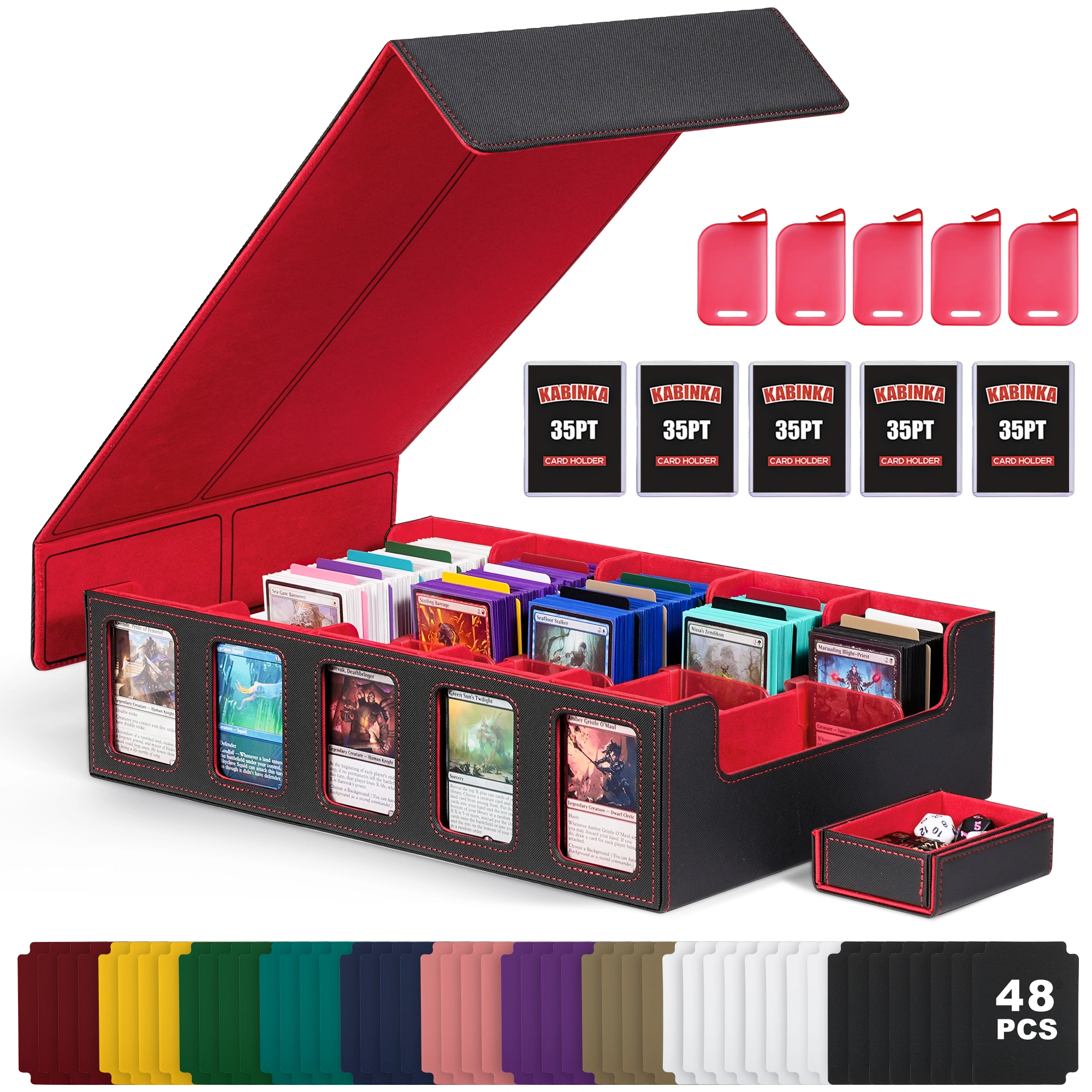
A card count alone does not tell you whether a box will fit your newly sleeved deck.
Look for a capacity description that explicitly refers to double-sleeved cards. Even then, sleeve combinations can vary, so check available compatibility notes.
Newly sleeved cards may also hold air between the layers. Let the deck settle through gentle, normal handling rather than using the box lid to compress it.
Keep tokens and accessories in mind. Space for the playable deck does not automatically include room for extra cards or a rigid commander holder.
For a more detailed explanation, read our deck box capacity guide for 100 double-sleeved cards.
A close-fitting inner sleeve, a regular playing sleeve, and an oversleeve serve different roles. Confirm the card size and intended use before combining products.
Mixing sleeve setups can make some cards feel or look different from others. Keep the playable deck consistent. For organized events, check the applicable sleeve rules and ask event staff if you are unsure.
More layers do not replace careful handling. Keep drinks away from cards and avoid forcing a deck into a tight compartment.
The sleeving setup and the deck box need to work together. Test loading, closing, and removing the deck before relying on the combination for game night.
No. The decision depends on your protection preferences, budget, handling comfort, and storage space. Single sleeving can be a practical option for everyday play.
Do not assume compatibility. Check the intended card size and product guidance, then test the combination with a spare card.
It can. The extra thickness changes the size of the deck, while sleeve texture and trapped air can also affect handling. Try the setup before deciding whether you prefer it.
No. It adds a protective layer, but it should not be treated as a waterproof seal. Keep cards away from liquids regardless of the sleeve setup.
The right setup should protect your cards while remaining comfortable to use.
Start with sleeves that fit your cards, decide whether an inner layer suits your needs, and check the completed deck against your storage space. A setup that works well is one you can sleeve, shuffle, pack, and maintain without forcing anything into place.
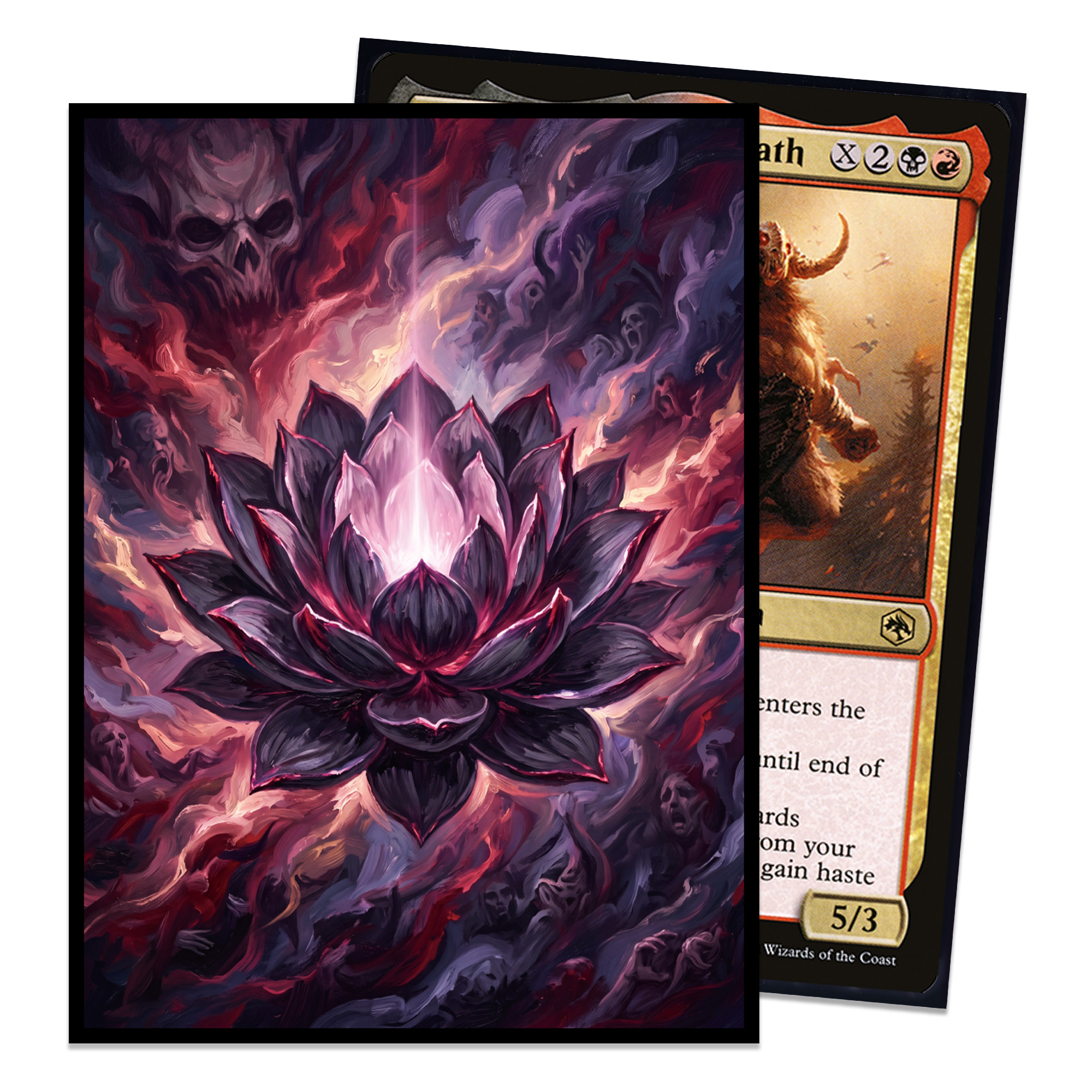
Explore Kabinka card sleeves to compare available designs and product details. If you plan to double-sleeve, check compatibility with your chosen inner sleeves before preparing the full deck.
For help choosing storage around your sleeve setup and accessories, read How to Choose a Deck Box for Your MTG Commander Deck.
Copyright Shenzhen Rushidao Technology Co., Ltd. All Rights Reserved. POWERED BY UEESHOP


