EN
USD
A deck you play every week, a collection you enjoy browsing, and several hundred duplicates do not all need the same storage setup.
Deck boxes, binders, and storage boxes serve different purposes. Choosing between them starts with how you use your cards—not simply how many you own.
Use a deck box to keep a playable deck together, a binder to browse cards page by page, and a divided storage box to organize larger groups of cards. If your collection includes all three uses, a combination may be the most practical approach.
Here is how to decide what belongs where.
| Storage type | Most useful for | How you access cards | What to check |
|---|---|---|---|
| Deck box | Completed decks and game-night setups | Remove the deck as a group | Sleeve fit, closure, and accessory space |
| Card binder | Sets, favorites, and trade selections | Browse individual cards in pockets | Pocket size, page layout, and sleeve compatibility |
| Storage box | Duplicates, deck-building cards, and larger collections | Search labeled rows or sections | Internal dimensions, dividers, and capacity conditions |
These are starting points rather than strict rules. A compact collection may fit comfortably in one format, while a larger collection may benefit from several.
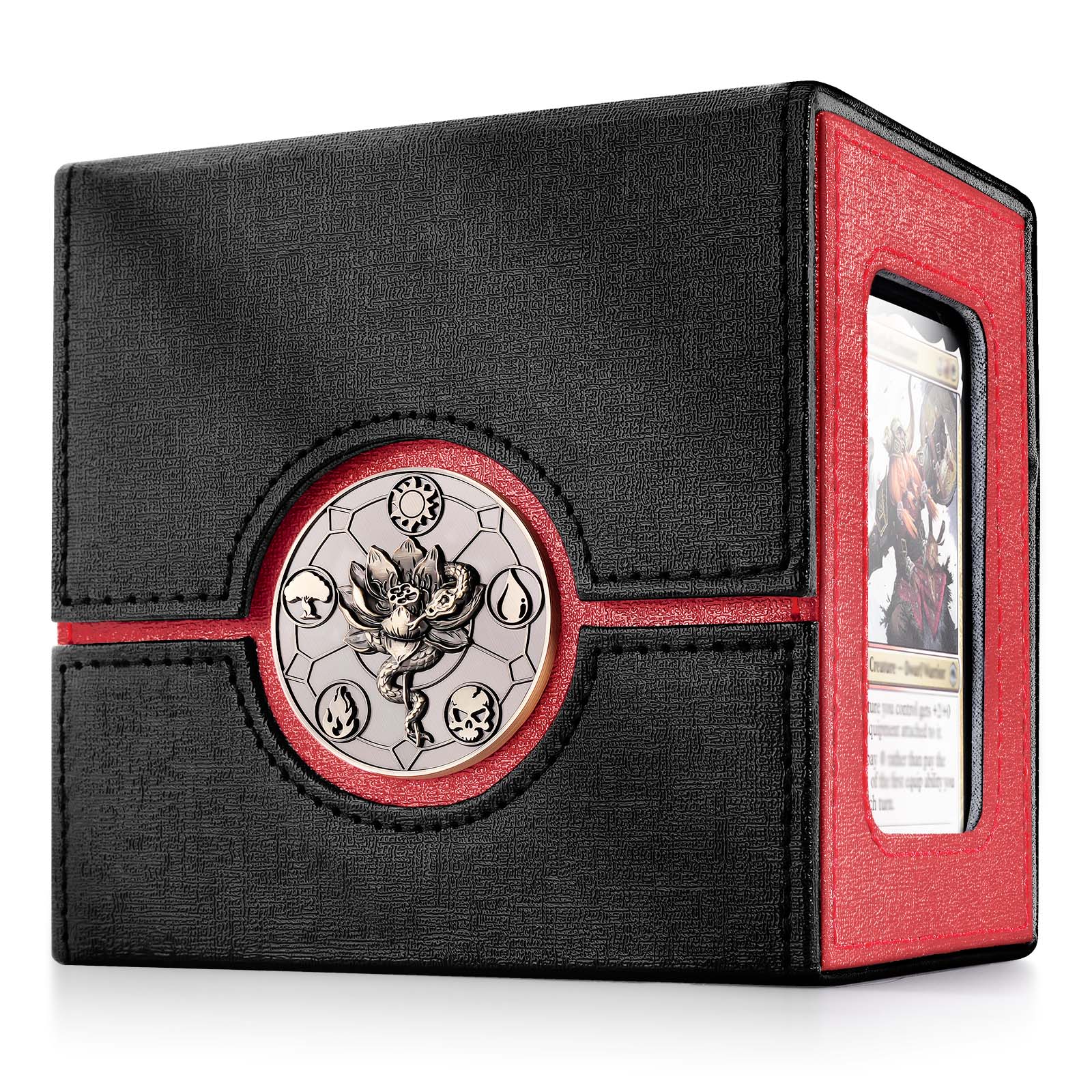
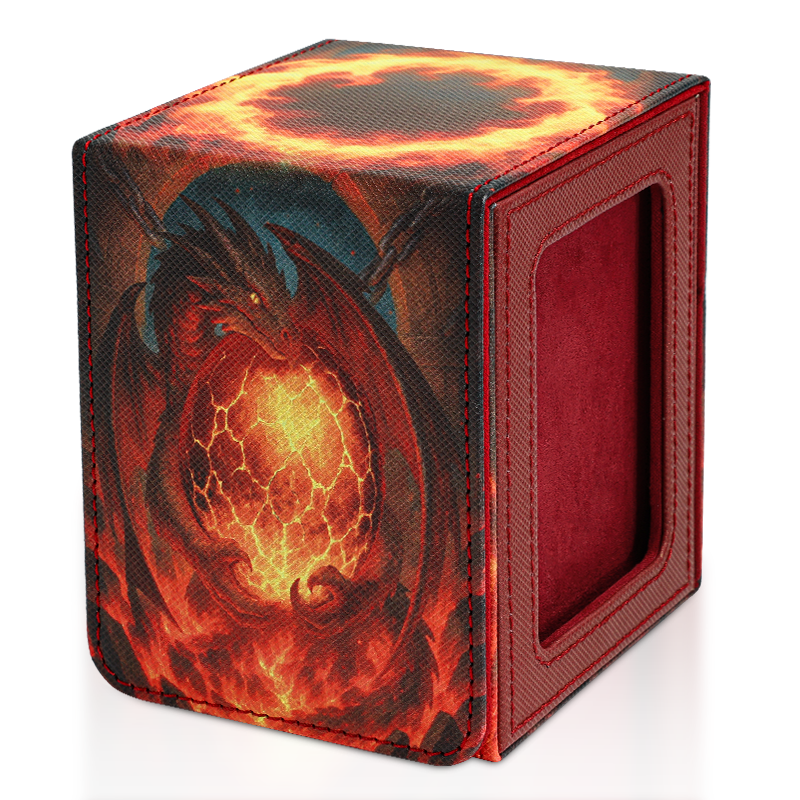
A deck box keeps a playable deck in one place, ready to take out and use.
It can be a convenient choice when you regularly bring cards to a game store, a friend’s home, or a weekly play session. Instead of removing individual cards from binder pockets, you can retrieve the complete deck at once.
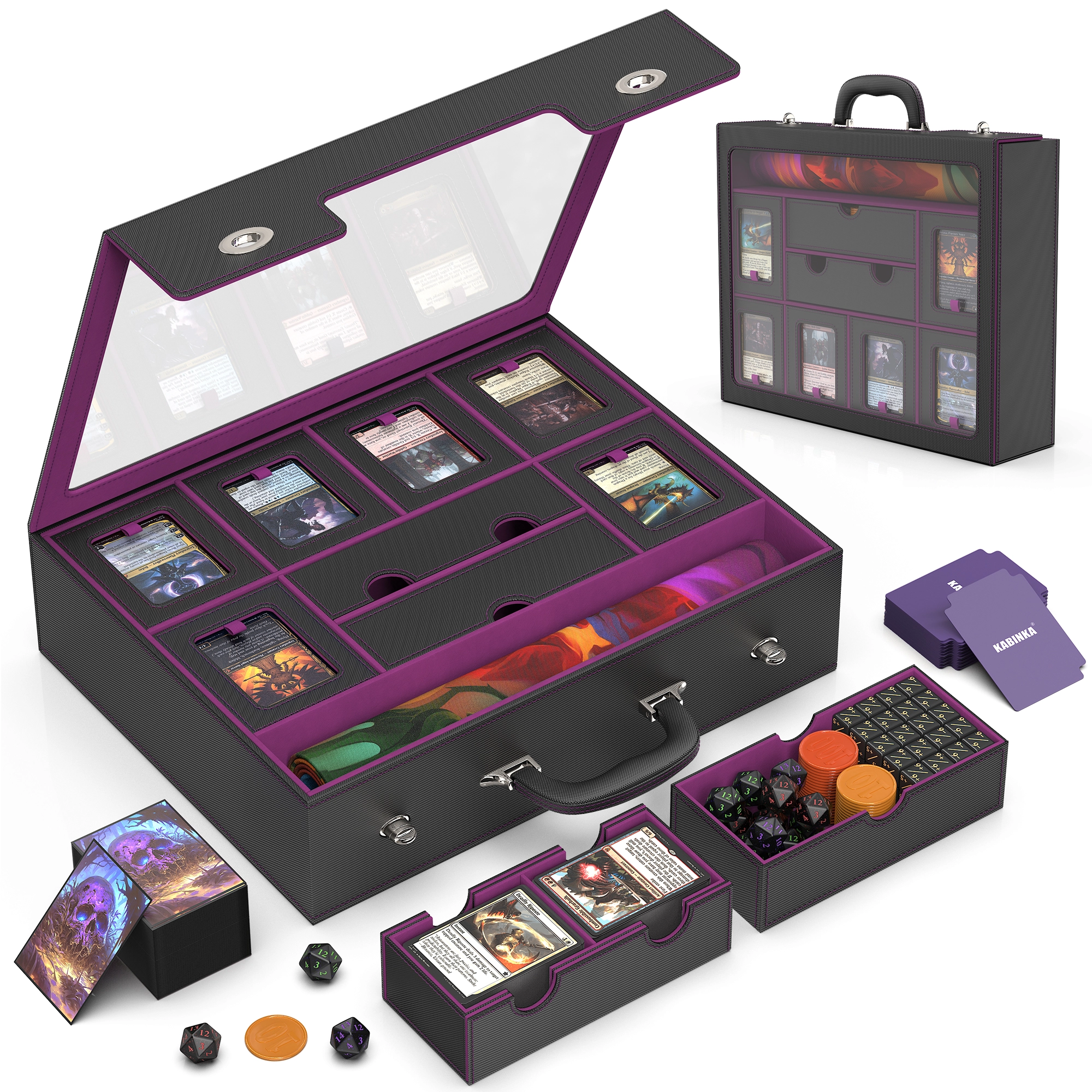
Depending on the model, a deck box may also offer separate space for tokens, dice, or a commander holder.
Start with your sleeve setup. A capacity claim for unsleeved cards does not tell you whether the same number of double-sleeved cards will fit.
Then consider the extras you carry. Tokens and accessories need space beyond the playable deck, unless the listed capacity explicitly accounts for them.
Finally, check everyday usability: can you remove the cards comfortably, close the box normally, and fit it in your usual bag?
For a fuller checklist, read How to Choose a Deck Box for Your MTG Commander Deck.
A deck box is not always the easiest way to browse a collection visually. If you want to compare artwork, show a complete set, or let someone look through trade cards, individual pockets may be more convenient.
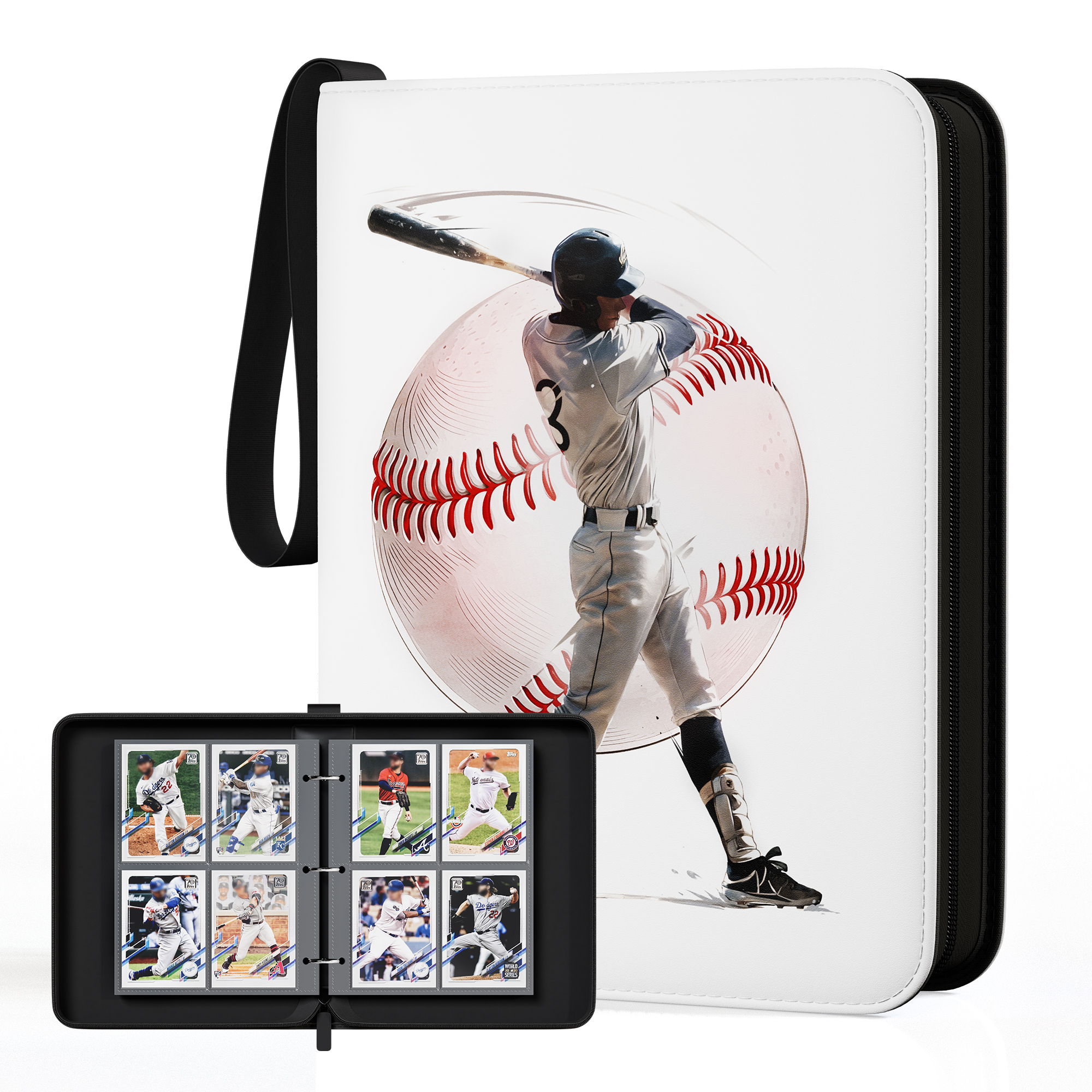
A card binder gives each card a visible position within a page.
That makes it useful for collections arranged by set number, character, theme, or personal preference. It can also help you show a selection of trade cards without repeatedly handling every card.
The main advantage is visibility: you can look across a page rather than search through a stack.
Check whether the pockets accommodate your cards with the sleeves you intend to use. Standard card pockets should not be assumed to fit rigid toploaders or graded holders.
Consider the page layout, too. The number of pockets per page affects how the collection looks and how large the binder feels when you carry it.
Read capacity descriptions carefully. Confirm how the advertised total is calculated, and avoid placing extra cards into pockets beyond their intended use.
When filled, the binder should close normally without forcing the cover or bending the pages.
A binder can become time-consuming to rearrange if you constantly move cards between decks. Large quantities of duplicates can also occupy many pockets without making the collection easier to browse.
For those cards, labeled storage sections may be more practical.
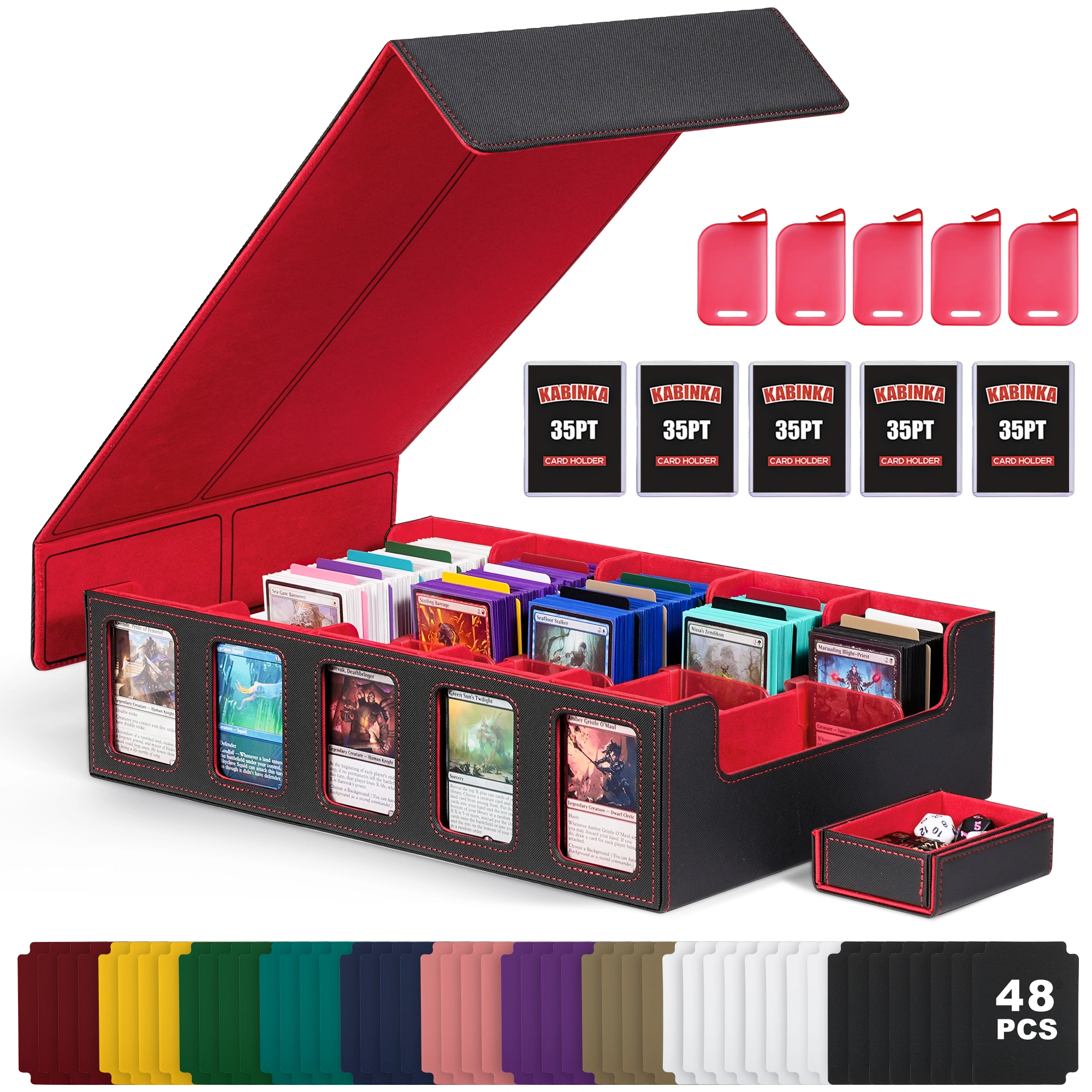
A divided storage box provides space for cards arranged in rows or compartments.
It can work well for duplicates, deck-building supplies, and collections you search by category. Instead of giving every card its own visible pocket, you give each group a predictable location.
For example, you might organize cards by game, then set, color, or card type.
Look at usable internal dimensions and the conditions behind the capacity figure. Sleeved cards, unsleeved cards, and rigid holders occupy different amounts of space.
Check the included organization tools as well. Dividers can separate categories, while suitable stoppers can help support cards in partially filled rows.
Leave enough working room to remove cards without bending them or catching sleeve corners. Packing a row as tightly as possible may make daily use frustrating.
A large box is not necessarily comfortable to carry to every game session. It also requires clear labels if you want to locate cards quickly.
For displaying favorite artwork or keeping one ready-to-play deck accessible, another format may be easier to use.
You may find that each format solves a different part of the same collection.
For example, a player who also collects sets could use:
A deck box for the deck they play regularly.
A binder for a favorite set or a selected trade collection.
A divided storage box for duplicates and future deck-building options.
This avoids making one storage format do every job.
You do not need to buy all three at once. Start with the problem you currently notice most. If finding duplicates is difficult, improve your loose-card storage. If you keep rebuilding your deck from binder pages before each game, a dedicated deck box may be more useful.
A binder advertised for several hundred cards and a box advertised for the same number can offer very different experiences.
The binder count relates to its pocket arrangement. A box’s capacity depends on its usable dimensions and the cards or sleeves used to calculate that figure.
Before comparing products, ask:
Does the stated capacity refer to sleeved or unsleeved cards?
Will my cards stay in inner sleeves, regular sleeves, or rigid holders?
Do dividers or accessories occupy part of the space?
Can I access the cards comfortably when the product is filled?
If you double-sleeve your decks, our guide to deck box capacity for double-sleeved cards explains the fit considerations in more detail.
It depends on how you use them. A binder is useful for browsing and showing individual cards. A box can be more convenient for organizing larger groups or keeping a playable deck together.
You can, provided the pockets suit the cards and sleeves. However, removing and returning the whole deck each time you play may be less convenient than using a deck box.
Do not assume they will fit. Use a binder specifically designed for your holder size, or check the manufacturer’s compatibility information.
The category alone does not establish protection. Fit, materials, construction, closure, and handling all matter. Avoid overfilling any format, and do not assume waterproof or impact-resistant performance unless the specific product supports that claim.
The right storage makes your collection easier to use: a complete deck ready for game night, favorite cards easy to browse, and loose cards easy to find.
Start with the task, then check the dimensions and sleeve compatibility. Choose enough room for comfortable access rather than relying only on the largest advertised card count.
Explore Kabinka deck boxes, card binders, and card storage boxes to compare formats for the different parts of your collection.
Copyright Shenzhen Rushidao Technology Co., Ltd. All Rights Reserved. POWERED BY UEESHOP


