EN
USD
A graded card already has a rigid holder, but keeping several holders organized introduces another storage decision. You need somewhere to arrange them, find individual cards, and carry the collection when necessary.
The right case starts with fit. A large advertised card count does not tell you whether your particular holders will sit comfortably inside.
Choose a graded card storage case by checking holder dimensions first, then usable capacity, internal organization, and how you plan to carry or display the collection.
Here is a practical checklist to guide that decision.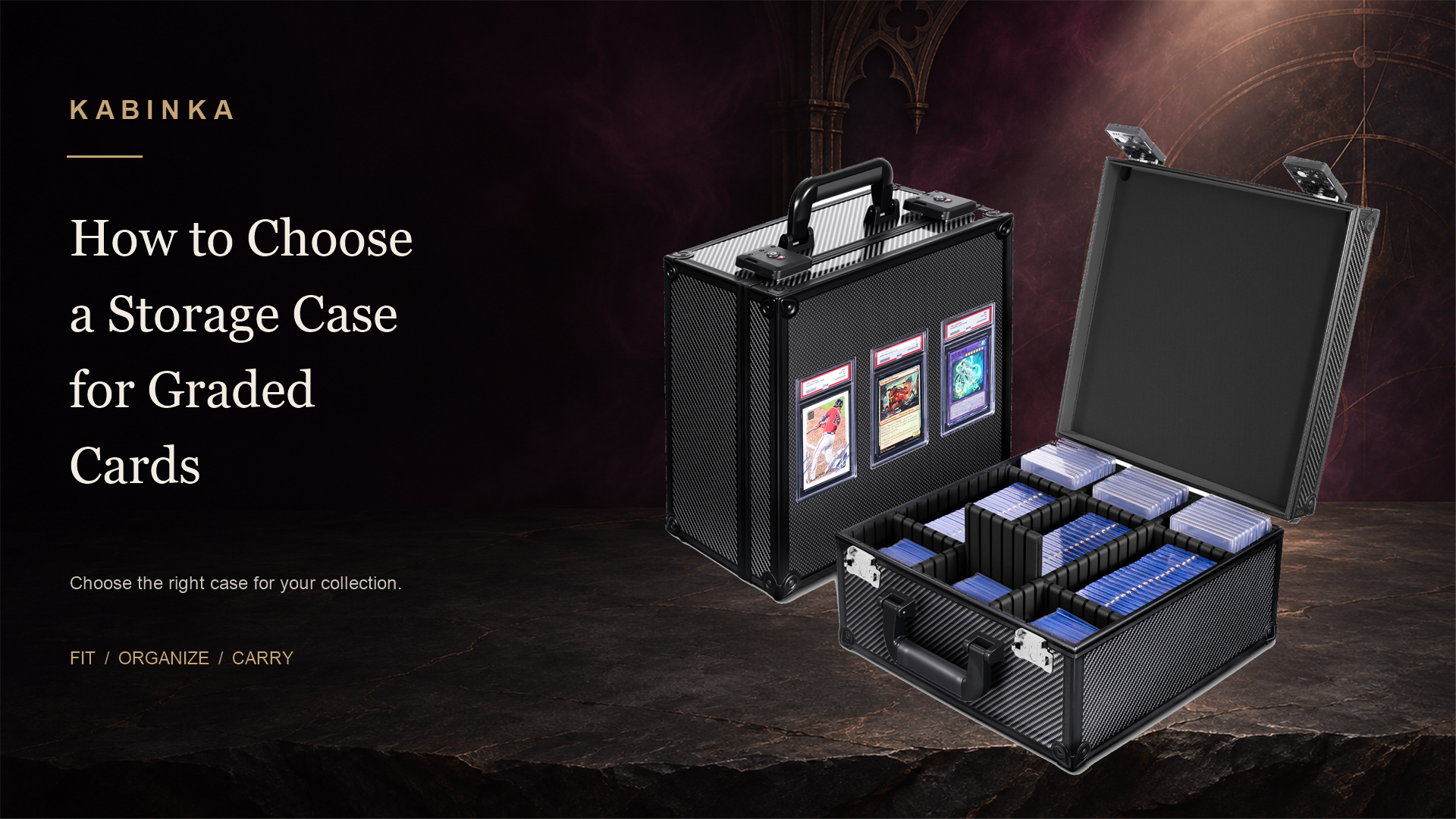
A graded card holder, often called a slab, takes up more space than the card inside it. When comparing cases, measure the outside of the holder rather than the card.
Record its:
Overall height.
Overall width.
Thickness.
Dimensions with any protective sleeve or bumper you intend to keep on it.
If your collection includes different holder types, check each type. Do not assume that compatibility with one holder establishes compatibility with every other holder from the same grading company.
Compare these measurements with the case’s usable compartment dimensions and any published compatibility notes.
If the listing does not provide enough detail, ask about your specific holders before ordering.
A listing may mention several capacities: unsleeved cards, toploaders, magnetic holders, or graded slabs.
Those figures are not interchangeable.
| Capacity description | What it tells you |
|---|---|
| Unsleeved-card capacity | Space measured around cards without rigid holders |
| Toploader capacity | Capacity for the particular toploaders used in the specification |
| Magnetic-holder capacity | Capacity based on a specified holder format or thickness |
| Graded-slab capacity | A useful starting point when the holder type is identified |
A case that holds a stated number of magnetic holders will not necessarily hold the same number of graded slabs.
Ask which holder type was used to establish the capacity and whether dividers or display positions are included in that figure.
For a mixed collection, consider how the compartments will accommodate your actual combination of holders. Leave enough room to retrieve individual slabs comfortably.
The outside of a case may look substantial, but the interior determines how the holders sit.
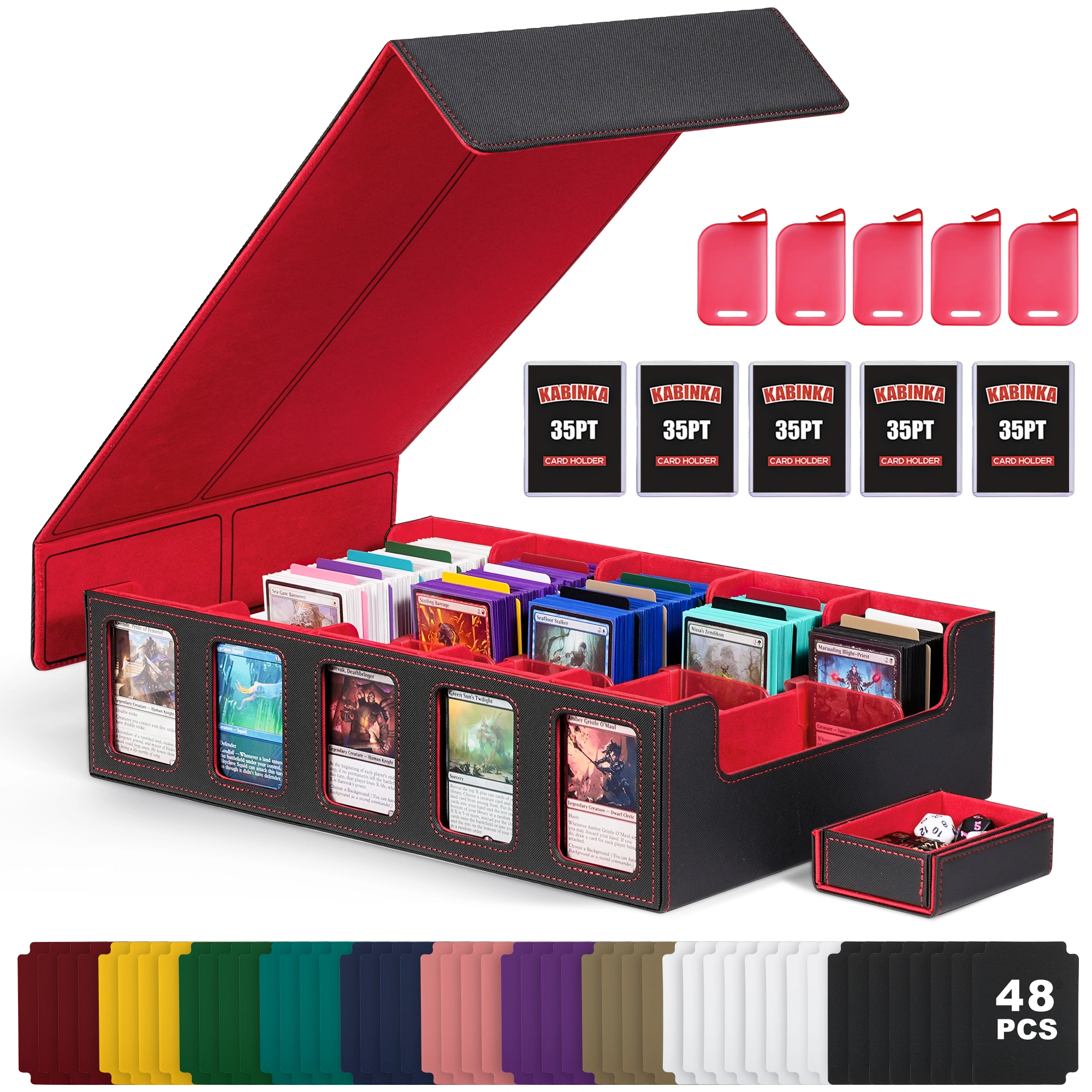
Look for compartments that support your slabs without requiring you to force them into place. Dividers can help separate groups and manage unused space, while a suitable lining can reduce direct contact with hard interior surfaces.
Check whether dividers are removable or adjustable, and how securely they stay in position during normal handling.
Useful questions include:
Can I separate different holder sizes?
Will a partially filled section keep its holders supported?
Can I see or identify the cards without removing an entire row?
Is there enough clearance to lift a holder out?
Does the lid close normally with the holders in their intended position?
A snug, supported fit should still allow comfortable access. Avoid squeezing holders into compartments that are too narrow or using the lid to press them down.
A case for occasional transport may prioritize a compact layout and an easy-to-carry handle. A case you keep on a shelf may also benefit from a display feature.
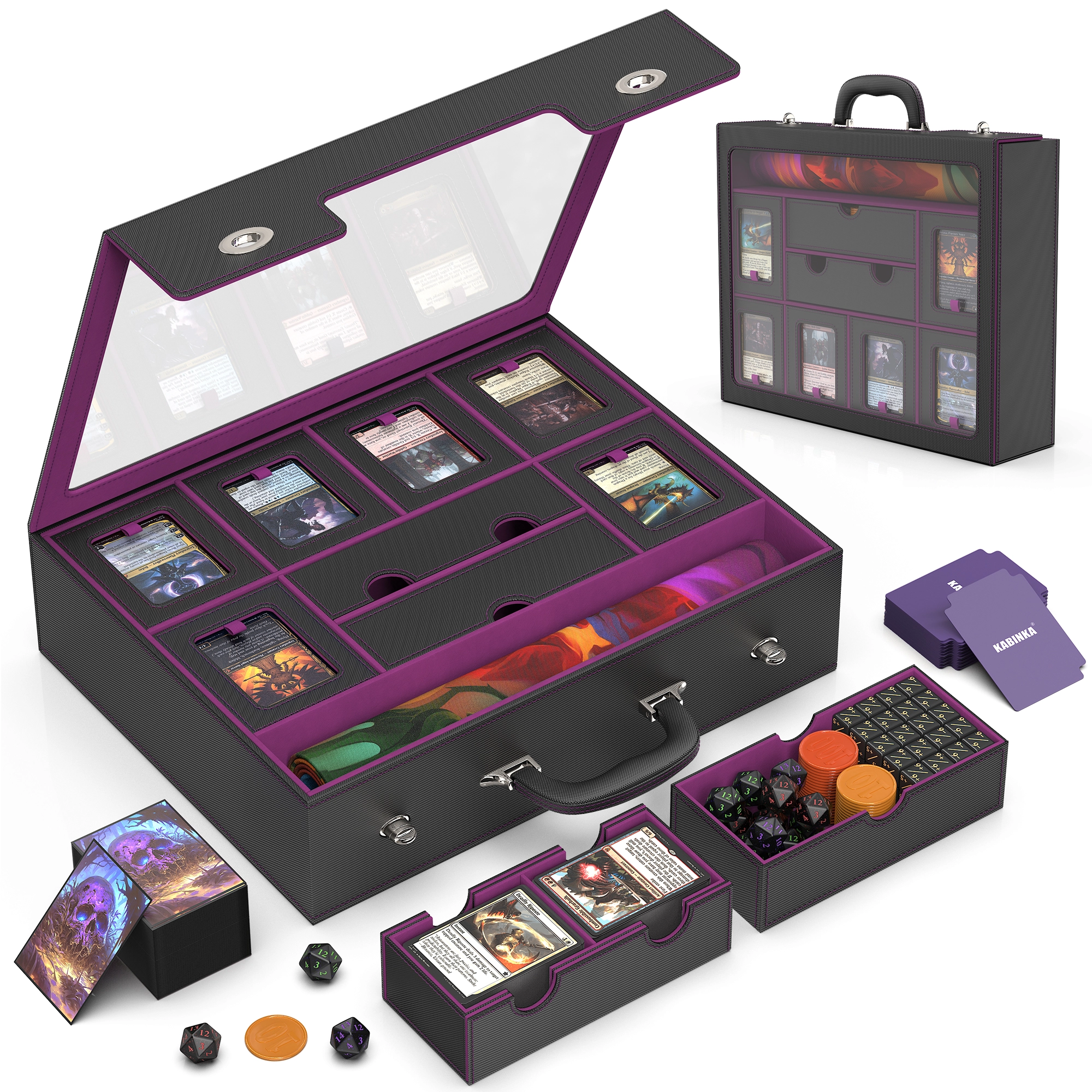
If you like viewing selected cards without opening the case, a display window can be useful. Check the dimensions and arrangement of the display positions separately from the main storage area.
A card that fits in a storage row may not fit in a dedicated display slot.
Kabinka’s graded card storage case listing includes a display window and removable EVA dividers. These are useful features to compare against your collection’s layout, but you should still confirm fit for the holders you plan to use.
A transparent window should not be assumed to provide UV protection unless that property is specifically documented. Choose a storage location away from prolonged direct sunlight.
An empty case is only part of the weight you will carry.
Think about where you intend to take it: between rooms at home, to a local trade session, or around a card show. The larger the collection you pack, the more important comfortable handling becomes.
Check:
The case’s empty weight and any stated load guidance.
Handle placement and available grip space.
External dimensions.
Whether the case sits steadily when opened.
Whether latches close properly after loading.
Choose a size that suits the collection you expect to carry. A larger case may offer room to grow, but it can also take up more shelf space and become less convenient to move.
A locking closure can help control access and keep a case closed, but it does not make the case theft-proof.
Likewise, a hard exterior does not automatically establish waterproof, fire-resistant, or drop-tested performance.
Look for specific product information rather than assuming protection from appearance alone. If a particular level of protection matters to you, ask for the relevant specifications or testing information.
If the case has a combination lock, follow its setup instructions and test the new code while the case is empty and open.
Continue to handle the collection carefully regardless of the case style. Keep it away from liquids, excessive heat, and unnecessary pressure.
Before filling the case, decide how you want to find cards later.
You might arrange them by:
Sport or trading card game.
Player or character.
Set or year.
Personal collection versus cards available for trade.
Use labels on suitable dividers or maintain a small location list. If you track your collection digitally, include a location such as “Case A, Section 2.”
Keep your system simple enough to update when cards move. Clear organization is particularly helpful when you take only part of the collection to an event.
| Check | What to confirm |
|---|---|
| Holder fit | External holder dimensions match the usable compartment space |
| Capacity | The stated count refers to the holder type you use |
| Protective accessories | Sleeves or bumpers still fit comfortably |
| Dividers | The layout can support and separate your collection |
| Display area | Its slots fit the cards you want to show |
| Carrying | Loaded size and weight suit your routine |
| Closure | The lid and latches work without pressure on the holders |
| Protection claims | Any required performance is explicitly supported |
Do not assume universal compatibility. Check the holder types and dimensions specified for that case, especially if your collection includes different sizes or protective accessories.
Possibly, if the compartments fit both and keep them supported. Separate sections can make a mixed collection easier to organize.
Some spare capacity can be useful, but consider how the case supports your current collection while it is partially filled. Adjustable dividers may help you manage that space.
Not necessarily. Transparency alone does not establish UV protection. Check the product specifications and keep the case away from prolonged direct sunlight.
A useful graded card case should fit your holders, keep them organized, and make individual cards easy to access.
Start with measurements, confirm what the capacity figure means, and consider how the case will work both at home and when carried.
Explore Kabinka card cases with locks to compare available storage options. For a closer look at the display layout and dividers discussed here, view the Kabinka graded card storage case with display window.
Copyright Shenzhen Rushidao Technology Co., Ltd. All Rights Reserved. POWERED BY UEESHOP


